

Índice de contenidos
Organizing a corporate event involves much more than coordinating a venue, suppliers and an agenda. Registrations, communications, access, attendee information and post-event data all need to stay connected throughout the process.
That’s where event software can make a real difference: not by replacing planning, but by reducing manual work, centralising information and giving organisers more visibility over what is happening before, during and after the event. That’s precisely why in this article, we’ll look at the role software can play across the different stages of a corporate event.
Importance of event planning
Good technology helps, but it does not replace a clear event plan. Before choosing tools, you still need to know what you want to achieve, who the event is for and how the different stages will fit together.
Definition of objectives
Clearly defining the objectives of the event is crucial. What do you hope to achieve? Who is the target audience? Establishing precise goals allows you to focus your efforts and measure success effectively.
Elaboration of a schedule
A detailed schedule ensures that all tasks are completed on time. From site selection to vendor contracting, each activity must be carefully planned and scheduled.
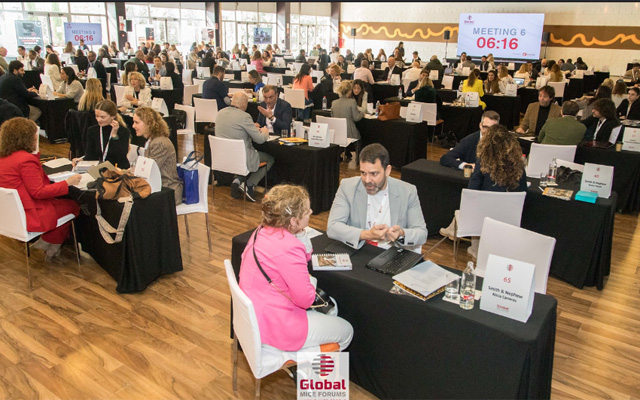
The role of software in planning
Technological advances have revolutionized the way we plan events. Specialized software offers tools that simplify and optimize planning.
🧠 TO REMEMBER: software can make the process more efficient, but the objective still comes first.
Project management software
An event management software helps bring together different parts of the event journey in one environment. With Meetmaps, for example, organisers can manage attendee registration, email communications, check-in, event information, networking and other event processes from the same platform.
The main benefit is having less information scattered across different tools and a more connected workflow from registration to post-event analysis.
Online collaboration tools
Platforms such as Slack facilitate communication and collaboration between team members, ensuring that everyone is aligned and working towards the same goals.
Optimizing logistics
Event logistics can involve several types of software depending on the complexity of the event, from supplier management tools to solutions for travel and accommodation coordination.
Supplier management
Supplier management software allows you to keep track of contracts, deadlines and deliveries, ensuring that all necessary elements are available at the right time.
Transportation and accommodation coordination
Specialized tools can help organize transportation and lodging efficiently, ensuring that all participants arrive on time and in comfort.
Improving communication
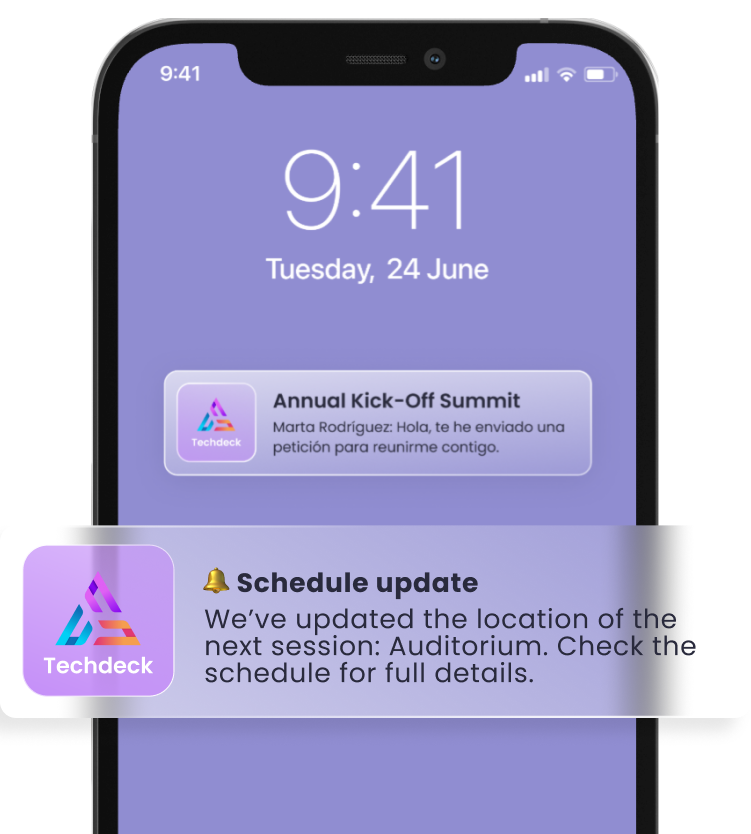
Communication tools can support both internal coordination and attendee communication. For attendees, automated emails and push notifications are especially useful for confirmations, reminders, schedule changes or important updates during the event.
Instant messaging platforms
Applications such as WhatsApp Business, Telegram and Chatbots allow instant messaging, facilitating coordination and quick problem resolution.
Automatic notification systems
Automatic notification systems keep everyone involved informed of important changes and updates, minimizing the risk of misunderstandings.
💡 TIP: not every update needs the same channel. Use email for information attendees can prepare in advance and push notifications for changes that matter in the moment.
Budget and resource management
Budgeting and resource allocation tools can help teams keep track of costs, suppliers and internal resources throughout the event. The important thing is to connect these operational decisions with the rest of the event plan, rather than managing each area in isolation.
Financial control
Financial software tools allow you to monitor expenses in real time, compare them to the budget and adjust the plan as needed.

Resource allocation
Resource management software facilitates the efficient allocation of personnel and materials, optimizing the use of available resources.
Data evaluation and analysis
An event management software can also help turn operational activity into useful data. Registration, attendance, check-in, session participation or networking activity can provide a clearer picture of how the event actually performed.
In Meetmaps, for example, the Check-in module provides live and post-event metrics such as registered attendees, presented attendees, attendance percentage and current capacity.
Real-time data collection
Software tools enable real-time data collection, providing valuable information on event participation and performance.
Post-event analysis
Post-event analysis helps identify what worked well and what aspects need improvement, providing a solid basis for planning future events.
In conclusion, an event software can support many different parts of a corporate event, from attendee management and communication to access control and post-event analysis.
The goal is not to add technology everywhere, but to use it where it reduces manual work, keeps information connected and gives the team better visibility over the event. Because the right software should make the operation easier to manage, not add another layer of complexity. Ready to simplify your next event? Talk to our team and see how Meetmaps can help. 🚀