
Índice de contenidos
B2B event matchmaking has become one of the most effective tools for generating valuable connections and transforming networking into real business opportunities. And it makes perfect sense. After all, networking remains one of the main reasons why professionals, companies, buyers and suppliers attend trade shows, conferences and industry events. However, there is a pattern that continues to repeat itself at many events: the right people are in the same place, but connections still depend too heavily on chance.
Because yes, a coffee break can lead to an interesting conversation. And a casual introduction can also turn into a business opportunity. But when we are talking about B2B events, relying solely on chance is not always enough.
More and more attendees arrive at events with very specific objectives: finding potential clients, identifying suppliers, discovering new partners or meeting strategic profiles for their business. And when time is limited, making the most of it becomes more important than ever. That is why event matchmaking has gained so much prominence in recent years. It helps structure networking in a much more strategic way, facilitating meetings between compatible attendees and ensuring that conversations have a clear purpose from the very beginning.
In today’s article, we’ll explore exactly what B2B event matchmaking is, how it works, the benefits it provides and how technology can help you turn networking into one of the most valuable elements of your event. Keep reading so you don’t miss anything!
What is B2B event matchmaking?
B2B event matchmaking is a system that connects attendees based on their interests, objectives or professional needs in order to facilitate relevant meetings during an event. Put simply, it helps the right people meet at the right time.
When an attendee invests time in attending a conference or trade show, they are usually not just looking to listen to speakers or visit exhibitors. They also expect to build connections that could lead to collaborations, business opportunities or long-term professional relationships.
This is precisely where the main difference between matchmaking and traditional networking appears. While many connections happen spontaneously during a coffee break, lunch or side activity, matchmaking adds a layer of structure that helps make those interactions much more intentional. 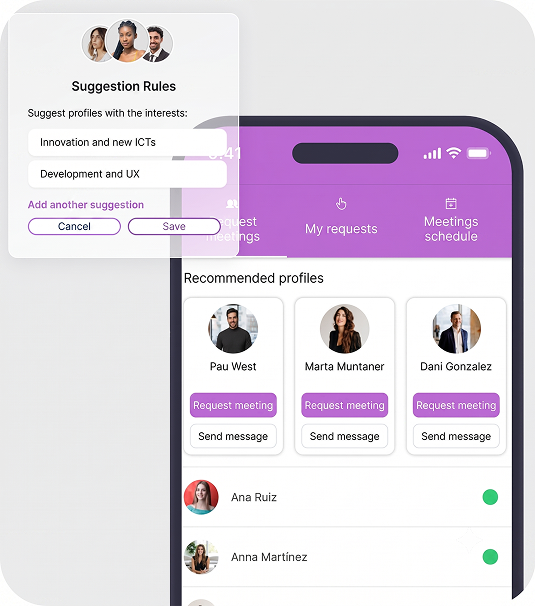
As a result, the goal is no longer simply to meet as many people as possible, but to spend time on conversations that can genuinely create value. And this benefits every stakeholder involved in the event: Attendees make better use of their time and participate in meetings that align with their objectives. Exhibitors generate more relevant conversations with potential clients or partners. Sponsors discover new opportunities to engage with profiles that matter to them.
Ultimately, B2B event matchmaking is not simply about organizing meetings. It is about facilitating connections with more context, more intention and a greater likelihood of turning into real business opportunities.
How does B2B event matchmaking work?
Although there are different matchmaking models for events, most follow a fairly simple logic: collecting information about participants in order to facilitate valuable connections.
Everything starts during registration, when attendees complete their profiles with information about their company, industry, interests and objectives. Depending on the type of event and registration form, participants can also specify whether they are looking for clients, suppliers, partners, investors or potential collaborators.
From there, the platform identifies compatible profiles and allows participants to discover relevant contacts, request meetings and build their agenda before the event even begins.
💡 Imagine an industrial trade fair. A procurement manager is looking for new technology suppliers, an exhibiting company wants to meet potential clients and a sponsor wants to connect with companies from a specific sector. Without a matchmaking tool, many of those conversations would depend on chance encounters. With a structured system, assistants can arrive at the event with meetings already scheduled and much clearer objectives.
In practice, the process usually includes:
- Creating professional profiles
- Defining interests and needs
- Recommending compatible contacts
- Requesting meetings
- Automatically generating personalized agendas
In hybrid or virtual events, these meetings can also take place through integrated video calls within the platform itself, extending networking opportunities beyond geographical limitations.
The result is far more efficient networking, where attendees spend less time searching for opportunities and more time taking advantage of them.
What are the benefits of B2B event matchmaking?
The main benefit of B2B event matchmaking is quite obvious: it improves the quality of connections. But its impact goes much further than simply facilitating meetings between attendees.
1️⃣ It helps participants make much better use of their time: At most trade fairs, conferences and professional events, attendees only have a few hours or days to generate as much value as possible. In that context, spending time searching through hundreds of participants to identify relevant contacts is not always the best strategy. Matchmaking eliminates much of that effort by facilitating connections aligned with each participant’s interests and objectives.
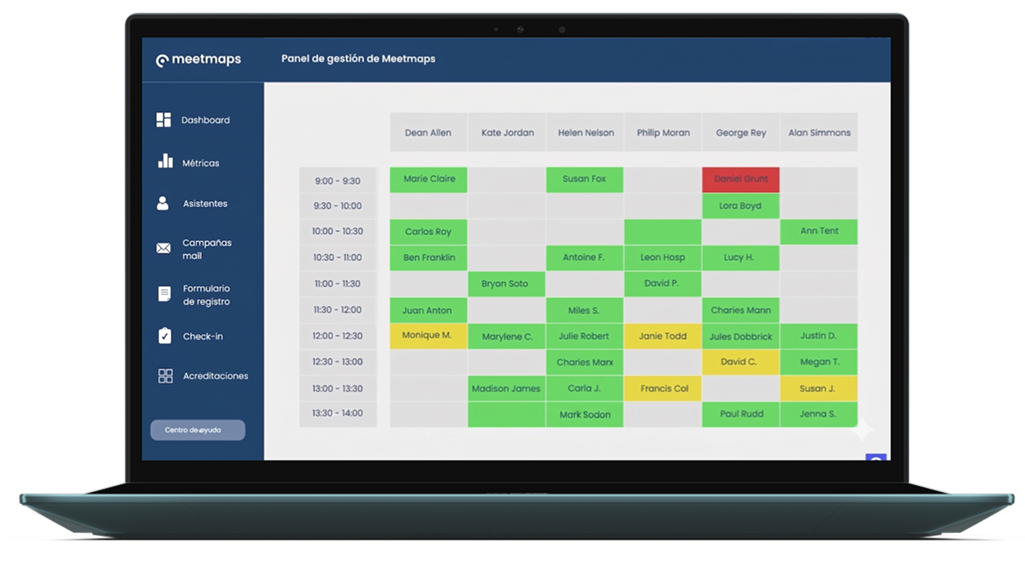
2️⃣ It makes meetings more relevant: The goal is not to fill a calendar with meetings but to generate conversations that have real potential to become opportunities. In many cases, a handful of well-targeted meetings provide far more value than dozens of improvised conversations.
This improvement in connection quality often translates into more business opportunities. When buyers, suppliers, sponsors and attendees can find each other more efficiently, it becomes much easier to create partnerships, identify commercial opportunities and start professional relationships with long-term potential. It is no coincidence that much of the success of many B2B events depends precisely on facilitating these types of interactions.
3️⃣ It improves the overall attendee experience: More and more professionals expect personalized experiences where content, recommendations and connections align with their interests. Arriving at an event with a structured agenda and pre-arranged meetings creates a much more positive perception and increases the perceived value of the experience.
And it is not only attendees who benefit. Sponsors and exhibitors also find matchmaking to be an extremely valuable tool for increasing visibility and connecting with profiles that are genuinely relevant to their business. Because in many cases, the success of their participation depends less on the number of people passing by a booth and more on the quality of the conversations they generate.
How can you organize B2B event matchmaking with technology?
There is a big difference between simply providing spaces for people to talk and actively helping the right people find each other. This is where technology has become a key ally in organizing networking in a much more strategic way.
Event matchmaking platforms allow organizers to collect participant information, identify compatible profiles, manage meeting requests and build personalized agendas without manually coordinating the entire process. As a result, attendees arrive at the event with some of their meetings already organized and a much clearer idea of how to make the most of their time.
For example, with Meetmaps it is possible to combine different networking models depending on the objectives of the event: 1to1 meetings between attendees, buyer-supplier meetings, meetings with sponsors and exhibitors, manual matchmaking processes, automated matchmaking based on shared interests and objectives…
In addition, these meetings can be integrated into personalized smart agendas, allowing organizers and participants to manage availability, meeting requests, schedule changes and even video calls for hybrid and virtual events from a single platform.
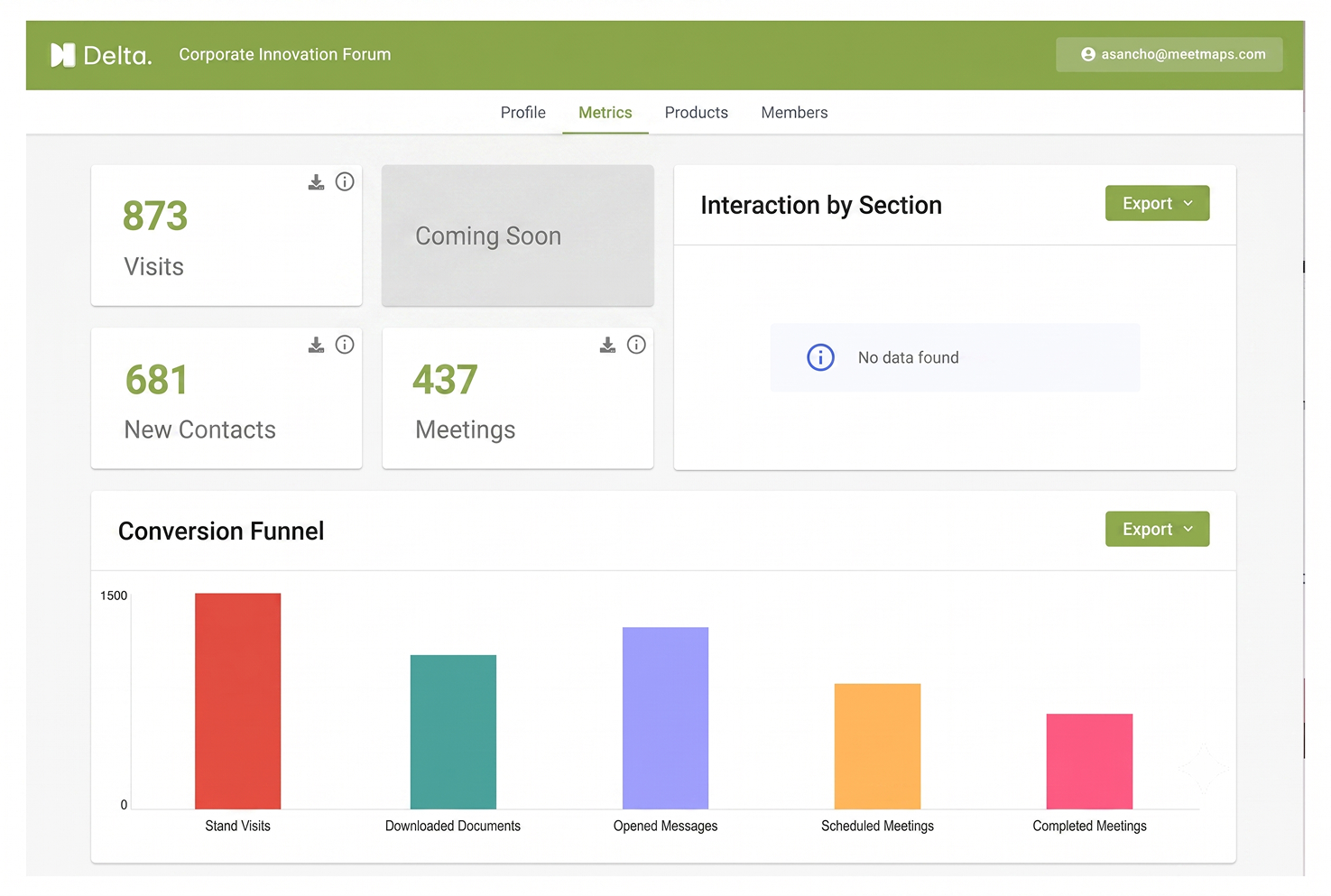
Beyond facilitating meetings, technology also helps measure what is actually happening: how many meetings take place, which exhibitors receive the most meeting requests, which networking formats are performing best. This information is particularly valuable for continuously optimizing the experience in future editions.
Because the challenge is no longer simply bringing large numbers of people together in the same space. The real challenge is ensuring that the time spent at the event generates useful conversations, relevant connections and genuine business opportunities.
At the end of the day, the goal of matchmaking is not to create more meetings. It is to facilitate the right meetings.
And when meetings are aligned with the interests, objectives and needs of each participant, the perceived value of the event changes completely. Attendees make better use of their time, sponsors and exhibitors generate more meaningful conversations and organizers deliver a much more useful and memorable experience.
With Meetmaps, you can structure networking, automate agendas and facilitate valuable meetings between attendees, sponsors and exhibitors at in-person, hybrid and virtual events from a single platform.
Would you like to discover the opportunities that could emerge if your attendees arrived at the event with the right meetings already organized? Talk to our team and discover how to implement matchmaking at your next event. 🚀