

Financing your event is undoubtedly one of the biggest challenges you will face as an organizer. And not only because you need to cover costs, but because it influences absolutely everything: from the strategy and communication to the type of experience you will ultimately be able to offer.
There’s also something important that is often overlooked: there is no single way to finance an event. In fact, many of the events that perform best do not rely on just one source of income, but combine several: ticket sales, sponsors, exhibitors and indirect revenue streams. That’s why, in today’s article, we’ll explore how to finance an event realistically, what options are available and how to combine them so your event is not only viable, but profitable. Keep reading so you don’t miss anything!
What are the 3 types of event financing?
Before deciding how to finance your event, there is one key thing you need to understand: not all revenue sources work in the same way. When we talk about event financing, we are not referring to a single income stream, but to different types of revenue that play different roles within the event. If we simplify it, event financing can be divided into three main categories:
1. Direct financing
This includes all revenue that comes directly from attendees, such as ticket sales or session registrations.
2. External financing
These are contributions made by third parties, mainly sponsors or partners.
3. Indirect financing
This refers to complementary revenue streams such as merchandising or exhibitors.
The key is not choosing just one option, but combining multiple revenue sources so you do not depend entirely on a single stream. This gives your event both stability and flexibility.
💡 TIP: An event that relies exclusively on ticket sales is far more fragile than one with diversified revenue streams.
How to get financing for an event
Before you start looking for sponsors or defining ticket prices, there is something many organizers overlook: fully understanding your own event. Because financing a private corporate event is not the same as financing a public-facing event. And an event focused on branding is also very different from one designed to generate leads or direct revenue.
To decide how to finance your event, you first need to clearly define:
- The type of event
- Your target audience
- Your objectives (branding, leads, revenue, etc.)
From there, you can begin building your financing strategy. Here are the key steps to consider:
- Define the event budget
- Calculate real costs (or the closest possible estimates)
- Decide which revenue streams you will activate
- Validate pricing (especially for tickets or exhibitor stands)
4 key ways to finance your event
These are the most common ways to finance an event. The key is not choosing only one, but understanding how each fits into your overall strategy.
1. Ticket sales or registrations
This is the most direct way to generate revenue. Depending on the type of event, ticket prices can vary significantly. Some events are free, others have symbolic pricing and others rely heavily on ticket sales as the core of their financing strategy.
The important thing is not just setting a price, but structuring the sales process correctly. Some models that work especially well include:
- early bird tickets
- discounts
- tiered pricing
- easy and accessible online sales
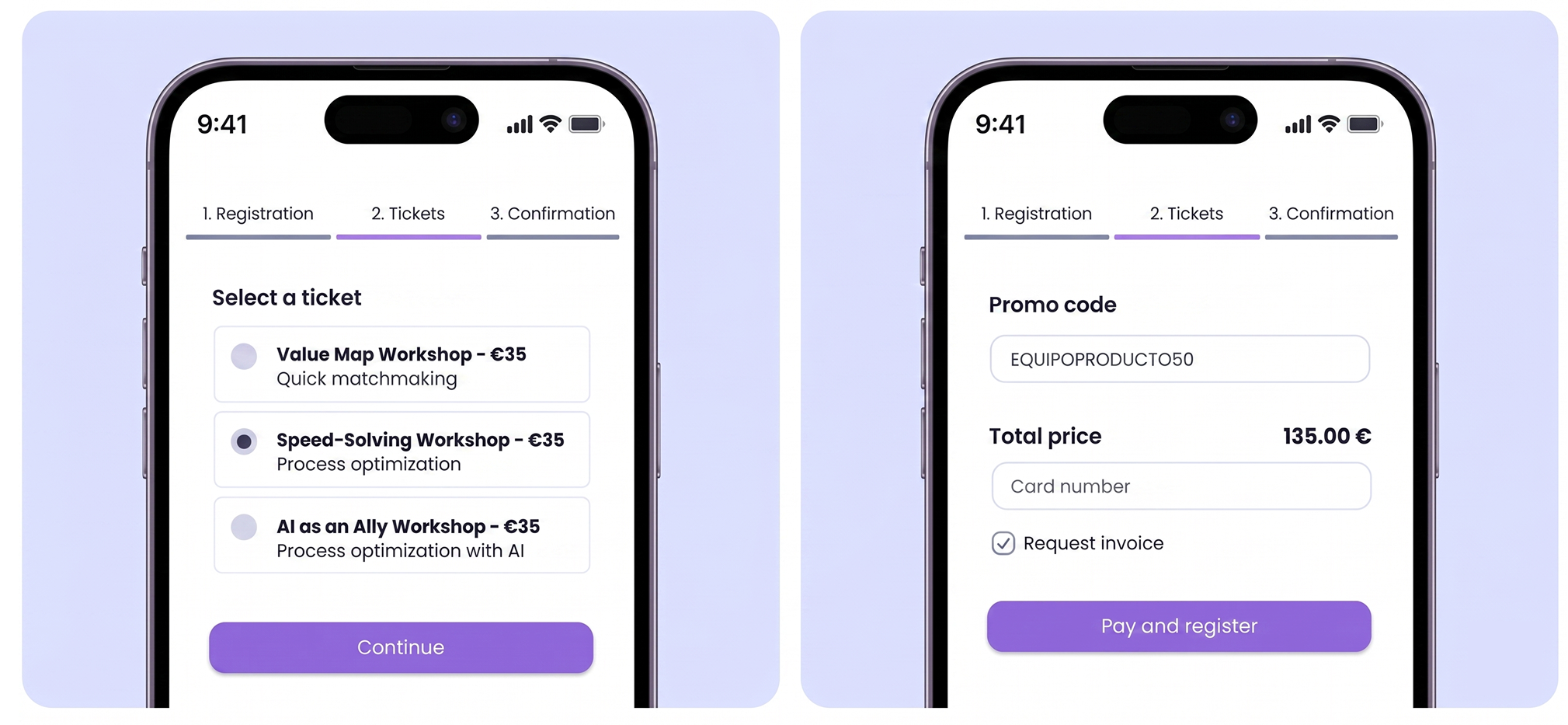
For this strategy to work properly, planning is essential. Clearly defining when tickets go on sale, how long they remain available and which channels will be used to promote them can make a huge difference.
💡 TIP: Pay attention to friction in the ticket purchasing process. If registration or checkout is too long or confusing, you may lose conversions.
2. Merchandising
Merchandising is often seen as secondary, but when done properly it can contribute more than expected. It does not only generate revenue, it also extends the event experience beyond the event day itself. Bracelets, t-shirts, tote bags or any item linked to the event work because they connect with the attendee’s memory and sense of identity.
That said, the goal is not simply to sell products, but to choose items that make sense for:
- the type of event
- the audience
- the image you want to project
3. Sponsors
In many events, sponsorship is the main source of financing. However, there is something important to understand from the beginning: sponsors invest because they expect a return. That return may come in the form of visibility, lead generation, positioning or access to a specific audience. That’s why the key is not simply “getting sponsors”, but understanding the value you are offering them. When there is alignment between the event and the brand, sponsorship works.
4. Exhibitors
This financing method is especially relevant for B2B events. Offering spaces or booths to companies allows you to generate revenue while also adding value for attendees. It is not only a financing source, but also an important part of the attendee experience.
Why does it work? Because it creates a win-win model:
- exhibitors gain visibility, contacts and business opportunities
- event planners generate revenue that helps finance the event
How to get sponsors to finance your event
This is where many events can get stuck. As we’ve seen, sponsors are not paying simply to appear at an event, they are investing because they expect a return. And that return usually comes through:
- access to a specific audience
- business opportunities
- positioning within a relevant environment
That’s why the question is not “how do we get sponsors?”, but rather: “What are we offering that genuinely interests them?”
The first is having a clear and well-developed sponsorship deck. Not a generic document, but something that properly explains the event, the audience and the real visibility and interaction opportunities available.
The second is having a concrete value proposition. What does the sponsor gain? Where will they appear? Who will they connect with? What type of impact can they expect?
And the third is segmentation. Not every sponsor is looking for the same thing, so sending the exact same proposal to everyone is usually ineffective.
Ultimately, financing your event is not about finding one magical formula that solves everything. It is about understanding how your event works, what value it generates and how you can transform that value into revenue through different channels: tickets, sponsors, exhibitors or merchandising. When these pieces fit together, financing stops being a problem and becomes a strategic part of the event itself.
And if you also want to keep everything under control (registrations, communication, attendees and data), tools like Meetmaps allow you to centralize event management and make decisions with greater clarity, without relying on multiple disconnected platforms.
Ready to organize your next event with less friction and more control? 🚀 Request your free demo and discover how to simplify event management while improving the attendee experience.